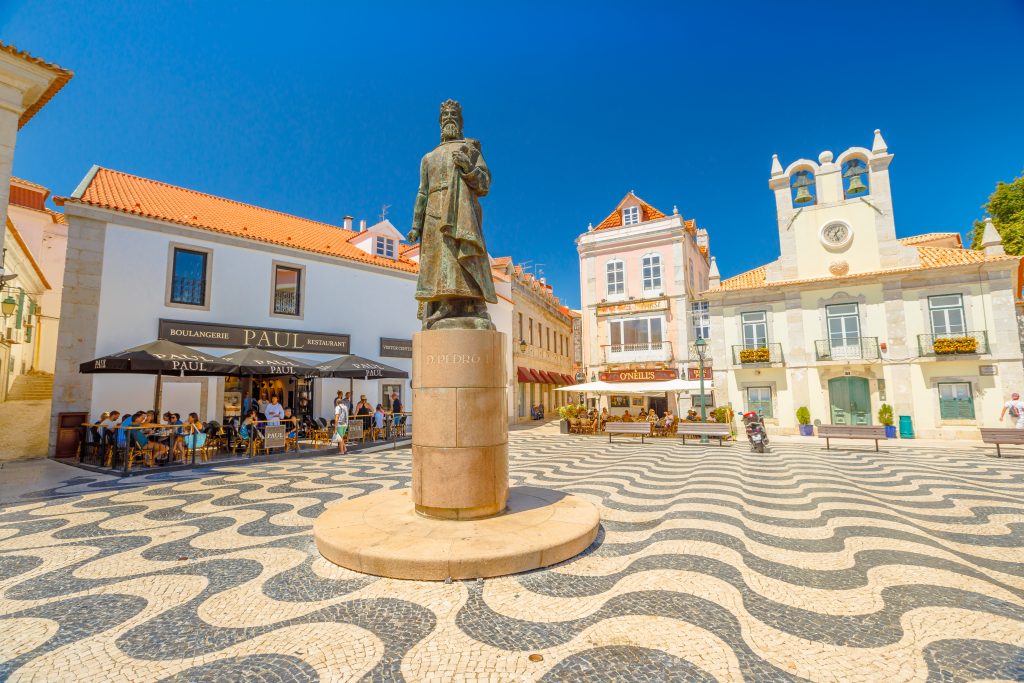
Planning a business retreat in Portugal is a logistics problem before it is a scenery problem. You need a flight pattern into Lisbon, a transfer that does not eat the first afternoon, rooms that match how the team actually sleeps, and a house that can hold a plenary without feeling like a hired hall. This guide is that operating manual for Cascais. For the destination argument — why this coast, why exclusive use, why not a hotel — read Corporate Retreat Cascais. The venue used as the worked example is Cascais Vacation, a 10-bedroom exclusive-use house (not Hotel Villa Cascais, not any hotel).
Lock the constraints before the restaurant list
Write down, in one paragraph: purpose (strategy, kickoff, client workshop, board), headcount, who must have an ensuite, whether anyone is bringing a partner, how many days of real work versus one outing, and whether you will run hybrid sessions back to HQ. Everything else — sailing, Sintra, a chef’s tasting menu — is decoration until those answers exist.
Cascais Vacation fits a specific band: a single group that can live in 10 bedrooms, work in a 165 m² lounge and a 55 m² theatre, eat as one table (indoor dining for 28, outdoor for 30), and stay inside exclusive use. If you are 80 people, stop; that is a hotel brief. If you are 8–20, you are in range, depending on how you use the smaller rooms. Do not invent a headcount from marketing photos. Use the sleeping map below and the bedroom-by-bedroom page.
Transfers from Lisbon Airport
Plan on private transfers unless someone in the group enjoys rental-car administration after a short-haul flight. Lisbon Airport (LIS) to Cascais is typically about 30 minutes via the A5 in light traffic, longer at the usual evening peaks. The house is in a residential, largely expat part of Cascais, close to the A5, about a five-minute drive from the centre and from several beaches. That is the geography: motorway, then a short local run, then you are on site.
Staggered arrivals work if you brief drivers and share a single on-site host contact. A 14:00–18:00 inbound bank is easier than a 09:00 meeting after a 23:00 landing. For US West Coast flights, do not put a plenary on the arrival evening; dinner and sleep are the agenda. Airport transfers can be arranged with the house; contact us with flight numbers rather than a vague “we’ll Uber.” Taxis exist; they are a worse system for a team of twelve with luggage and a need to arrive together.
Once you are in Cascais, you do not need a car per person. One or two vehicles, plus taxis, cover town dinners and a Sintra outing. The coastal train is the right tool for a Lisbon cultural afternoon, not for LIS with bags.
Meeting rooms and how to use them
Treat the house as three work settings, not one conference room with extra sofas.
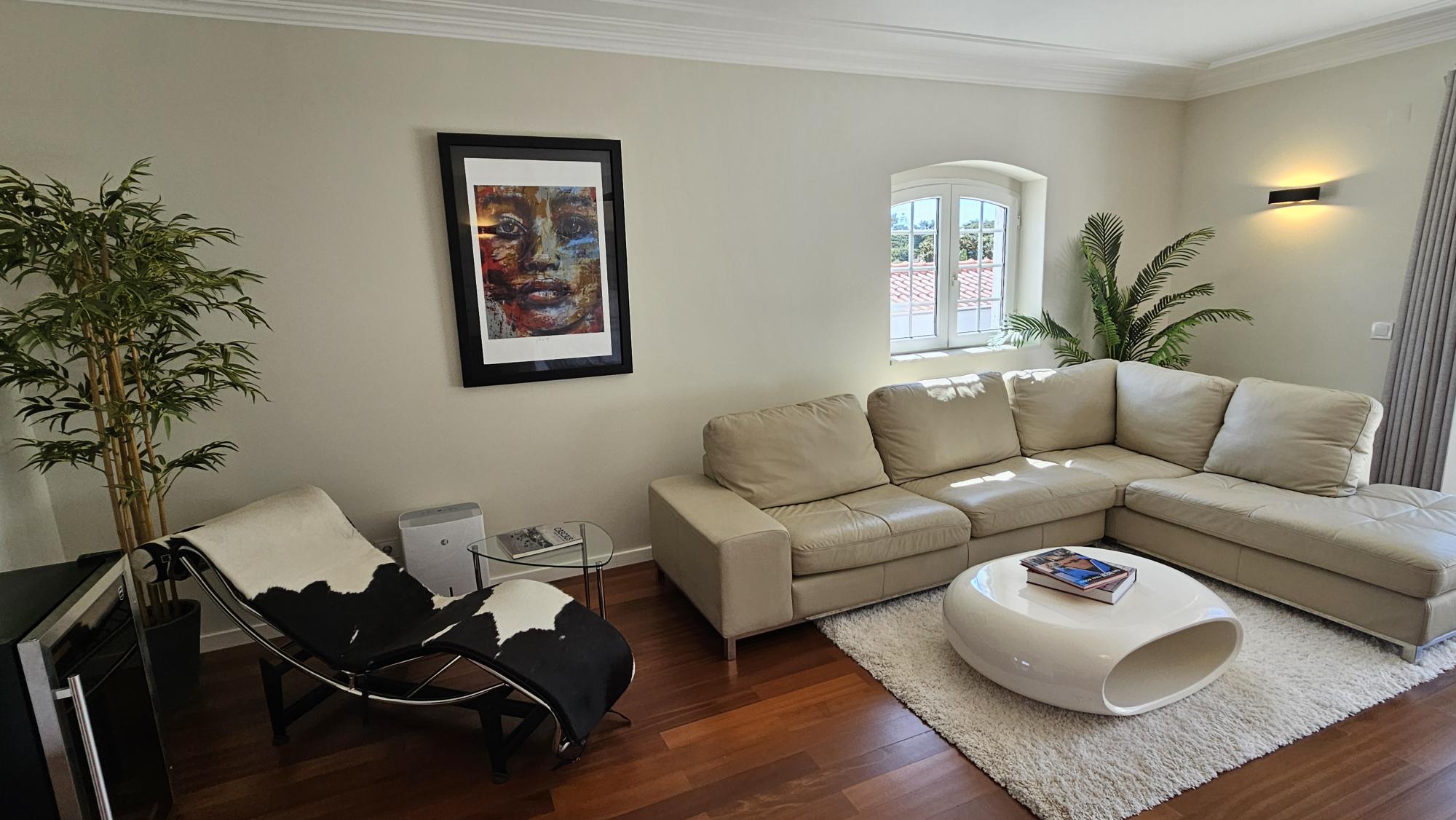
- Main lounge (165 m²): plenary, workshop, standing-room kickoff. Flexible seating; this is where the whole group should hear the same thing. The business page notes a comfortable working group in this room on the order of 20 people for a seated session — use that as a planning ceiling, not a legal occupancy certificate.
- Projector theatre (55 m², lounges for 9): film, deck walkthroughs, hybrid calls where you want a dark room and a proper image. Do not try to run two competing plenaries here.
- Breakouts: smaller sitting rooms, terraces, and the gardens. Walking meetings along a quiet residential street work in shoulder season; in August heat, keep breakouts indoors or by the pool with shade.
Technology on site includes high-speed Wi-Fi throughout, projectors and flat-screens, and video-conferencing capability. Commercial HVAC matters more than people admit: a 1,000 m² house in July is not a romantic porch if the working rooms cannot hold a temperature. Test the hybrid path the afternoon before any board call. The gallery shows living and outdoor spaces; walk the room plan in your head against your session types.
A high-level 10-bedroom sleeping map
Assign rooms like you would on a residential offsite, not like a hotel block. Cascais Vacation’s 10 bedrooms split, at a high level, as follows. Sizes and fittings are on the bedrooms page; this is only the planning map.
- Two master suites (each over 70 m²): upstairs and downstairs. King beds, large ensuites, private balconies; the downstairs master balcony includes a jacuzzi. Put principals, a visiting client, or a facilitator who needs a door that stays shut.
- Ensuite guest rooms (including the cabana): several further ensuites with king or queen beds. One is the garden cabana with doors toward the pool — useful for a guest who arrives late or likes to swim at odd hours. These are your default team rooms.
- Two non-ensuite bedrooms: still proper rooms with HVAC, better for people who do not mind a short walk to a bathroom, or for a couple of colleagues who already share space at home. Not the visiting CFO.
- Two compact staff ensuites: one at garden level, one at basement level (the basement staff room has no window and no HVAC). These are honest support rooms — chef, nanny, production, or overflow — not the rooms you show in the kickoff slide.
That is ten. It is not “unlimited villa sleeping.” If you need a second property, you are running a different event. If you need rollaways or a special configuration, ask in writing; do not assume. The two masters are the political decision. Make it before people land.
Sample agendas that respect jet lag and daylight
Three-night strategy week (the usual ask)
- Thursday: LIS arrivals mid-afternoon, informal walkthrough of the house, no slides, dinner at the long table. Phones in bedrooms after dinner if you can get away with it.
- Friday: 9:00–12:30 plenary in the lounge; lunch on site; 14:00–16:30 breakouts; 17:00 reset at the pool or gym; 19:30 working dinner (one structured question, not a second offsite).
- Saturday: 9:00 theatre for the “what we think we decided” playback; late morning outing (marina sail or a short coastal walk — not a full Sintra marathon unless the group is already local); free afternoon; closing dinner in town or at the house.
- Sunday: breakfast, bags, transfers to LIS. Do not add a 10:00 workshop.
Two-night board or client visit
Compress: arrival dinner, one full working day (lounge morning, theatre afternoon, no outing), departure the following morning. Put the board in the masters and the ensuite line. Catering on site both nights; a restaurant in the historic centre is a nice idea and a bad idea if you have a confidential deck on the table.
Five-night kickoff
Add a Lisbon train afternoon or a Sintra morning in the middle, not at both ends. Keep at least two mornings sacred for work. Use the gym, 12 m pool, 40°C jacuzzi, billiards, table tennis, and basketball hoops as recovery, not as a scheduled “team-building module” unless someone on the team genuinely wants to facilitate that.
Catering, cleaning, and the working day
On-site catering is available at an additional charge; private chef service is the usual pattern for retreats that do not want to lose 90 minutes to a restaurant transfer at lunch. The kitchen has two large islands and is built for volume. Breakfast should be on site every day. Lunch should be on site on working days. Dinner can leave the house once.
Daily cleaning and housekeeping can be arranged so the lounge resets while you are in an outing. Brief dietary requirements in the same document as the room list. Portugal handles fish, vegetables, and wine without drama; the failure mode is a surprise vegan count at 19:00.
Outings that do not wreck the agenda
Budget half a day, not a day, unless work is genuinely finished. Useful, low-friction options from this house: a sail from Cascais Marina; a walk in the Sintra-Cascais Natural Park; a single Sintra monument (not three); a town dinner in the historic centre. Guincho at full wind is a spectator outing, not a compulsory kitesurf lesson for a finance team. The area guide is enough scenery research; you do not need a destination-wedding planner.
A planning checklist
- Purpose, headcount, ensuite rules, hybrid yes/no
- Room assignment against the 10-bedroom map
- LIS flight bank and named transfer plan
- Session types mapped to lounge / theatre / breakout
- Catering: breakfast and lunch on site; dinner policy
- One outing, timed, with a weather alternative
- Wi-Fi and hybrid test the day before any external call
- Written confirmation via the contact form
Seasonal logistics, not seasonal poetry
April–June and September–October: best default for work, outdoor breaks, and restaurant availability. July–August: book earlier, start sessions earlier in the day, use HVAC, expect slower town movement. November–March: mild by northern European standards, easiest privacy, shortest daylight — put walking meetings at noon. None of this requires a different house. It requires a different start time.
If you are still deciding whether Cascais is the right country, go back to the corporate-retreat article. Mixed work-and-family weeks are a different product — that is the vacation rental, not this sleeping map. If you already have dates, send them with a headcount and a room-priority list. Cascais Vacation will remain a 10-bedroom exclusive-use house either way — a privately rented home in Cascais, Portugal, not a 4-star hotel that happens to have “villa” in the name.
Related reading
- Corporate Retreat Cascais: Why Portugal's Coast Works for OffsitesContinue
- Hosting Events in Cascais: Private Villa Gatherings, Weddings, and CelebrationsContinue
- Family Activities in Cascais: Beaches, Parks, Museums, and a 10-Bedroom Villa BaseContinue
- Portugal Travel Guide: Why Cascais Should Be Your BaseContinue
Stay at Cascais Vacation
Cascais Vacation is a 10-bedroom exclusive-use house in Cascais, Portugal — a privately rented home, not a hotel. Google sometimes confuses villa searches with Hotel Villa Cascais; this is a single house for your group only.