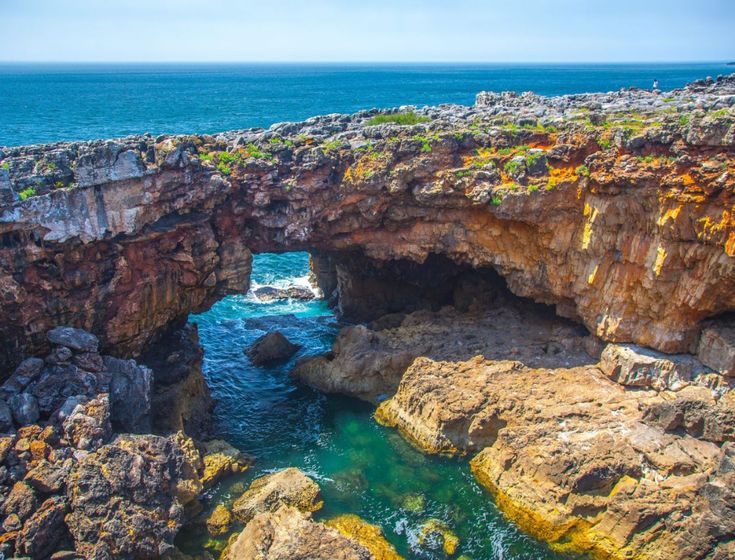
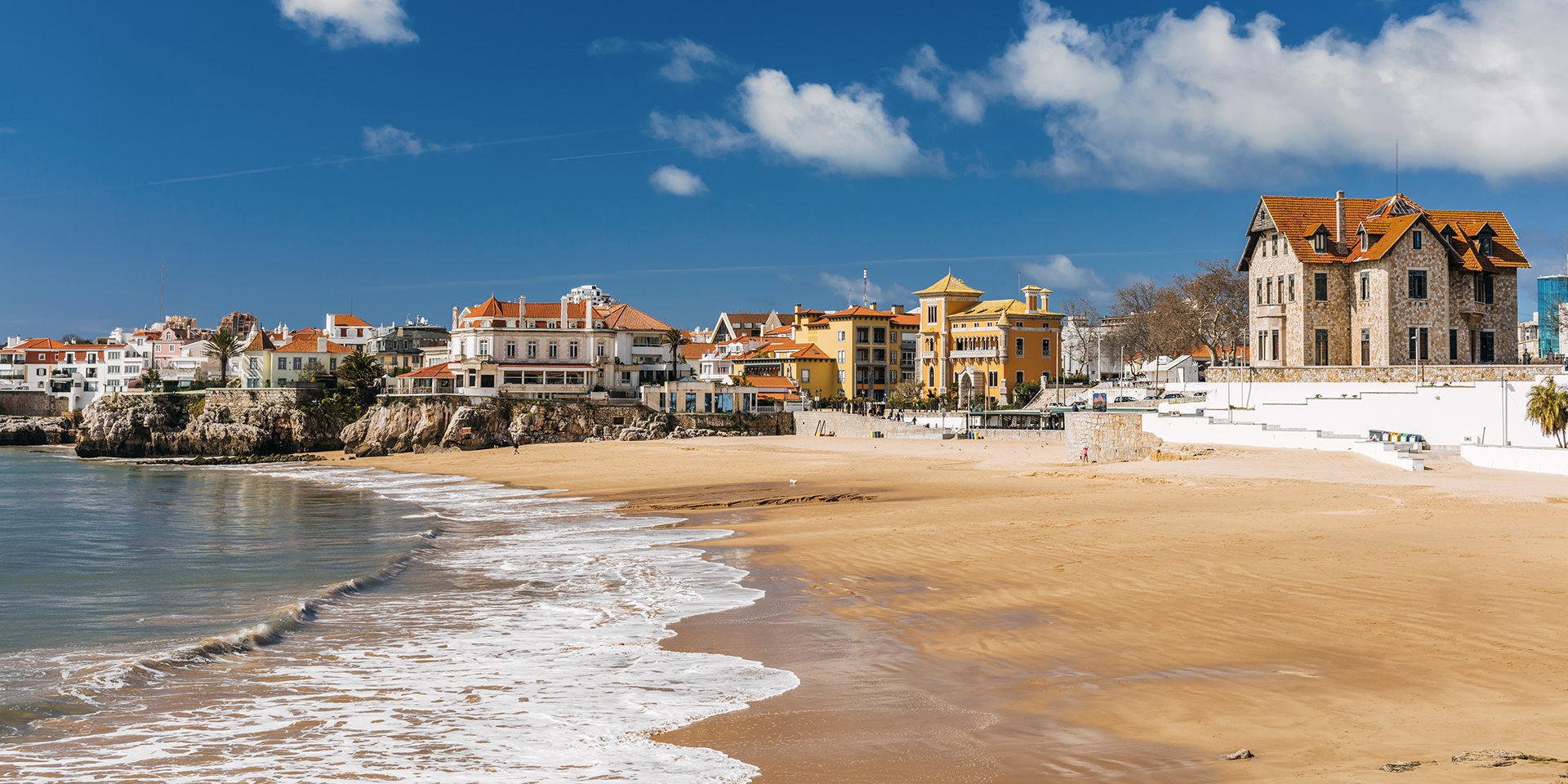
Beach life in Cascais is not one shoreline. In a single summer week you can swim in the sheltered town bays of Praia da Conceição, sit under the yellow tents at Praia do Tamariz in neighbouring Estoril, and watch kitesurf wings stack above the dunes at Guincho. This article stays on the sand and the water — surfing, sailing, paddleboarding, and how the Atlantic actually behaves in summer. For old-town dining, festivals, Sintra, and when to visit, use the summer itinerary for Cascais. A practical base is Cascais Vacation: a 10-bedroom exclusive-use house, not a hotel, about a five-minute drive from several beaches.
How the Cascais coast is laid out
Think of three bands. First, the town beaches in Cascais itself — Conceição, Duquesa, Rainha, and the small coves around the centre — short waves, easy access, cafés behind you. Second, the Paredão promenade east toward Estoril, where Praia do Tamariz sits below the casino gardens: still a bay beach, still family water, but a different postcard. Third, west of town, the coast opens to the full Atlantic at Guincho, with Boca do Inferno as the cliff interlude on the way.
That geography is why “going to the beach in Cascais” needs a decision, not a default. If you want to float and read, stay in the bay. If you want wind and space, go to Guincho. If you want a classic Portuguese summer photograph — tents, promenade, ice cream — Tamariz is the set. Many visitors try to do Guincho with small children at 1 p.m. in a north wind and then decide they dislike Cascais beaches. They were simply on the wrong band of coast.
The Cascais area guide places these beaches relative to town and the Sintra-Cascais Natural Park. From Cascais Vacation you drive; from a hotel on the waterfront you walk to the bay beaches and still need a car or taxi for Guincho.
Praia da Conceição and the town bays
Praia da Conceição is the workhorse town beach: a curve of sand on Cascais Bay, calmer water than anything west of the citadel, and a short walk to restaurants. It is the right default for swimming, for young children, and for a first-morning reset after a late Lisbon airport arrival. Neighbouring Praia da Duquesa behaves similarly. Praia da Rainha, the small cove once associated with Queen Amélia, is prettier than it is practical — a short dip and a photograph, not a base for a full day of kit.
Facilities on the town beaches are the point. You can rent loungers in season, buy water without a hike, and abandon the sand for lunch without moving the car. The water is Atlantic, so it is refreshing rather than soupy; in summer that is a feature. Lifeguard cover in high season is part of why families pick Conceição over a wilder stretch. Parks, ice cream, and a house-pool noon break live in the family activities guide, not here. Arrive before 11 a.m. on weekends in July and August, or come after 4 p.m. when the day-trippers from Lisbon thin out.
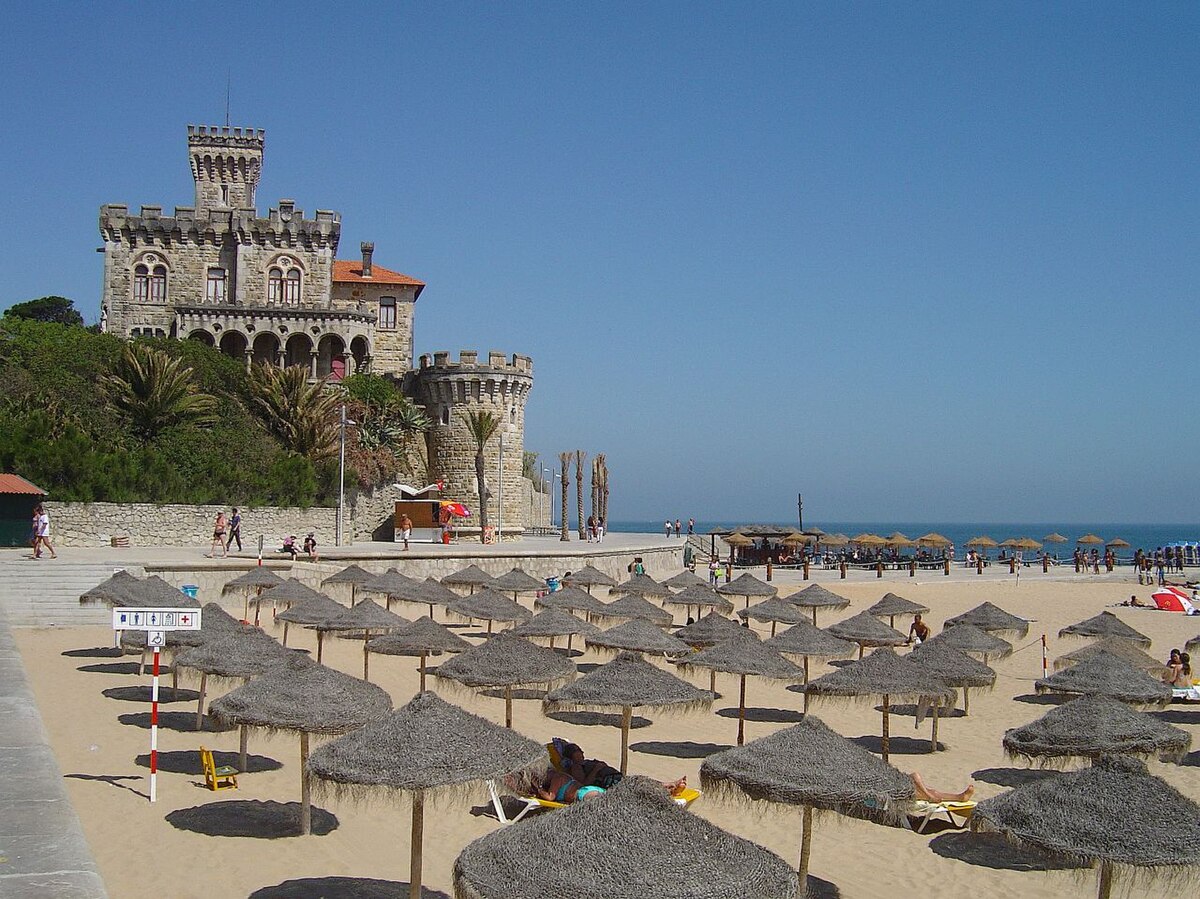
Praia do Tamariz, Estoril
Tamariz is technically in Estoril, a few kilometres east along the same bay, and it belongs in any honest Cascais beach brief because that is where many visitors actually spend the day. The yellow tents, the train line behind the promenade, and the casino gardens above it are the classic Estoril Coast image. Water stays relatively protected compared with Guincho. Changing facilities and beachfront restaurants make it easy to stay until early evening.
Getting there from Cascais is part of the pleasure: walk or cycle the Paredão, or take the local train one or two stops. Driving is unnecessary unless you are carrying boards. Tamariz is not a kitesurf beach; treat it as swimming, sun, and a long lunch. If your group splits — some want waves, some want to sit — send the sailors west and keep the sitters here.
Guincho: space, wind, and the Atlantic
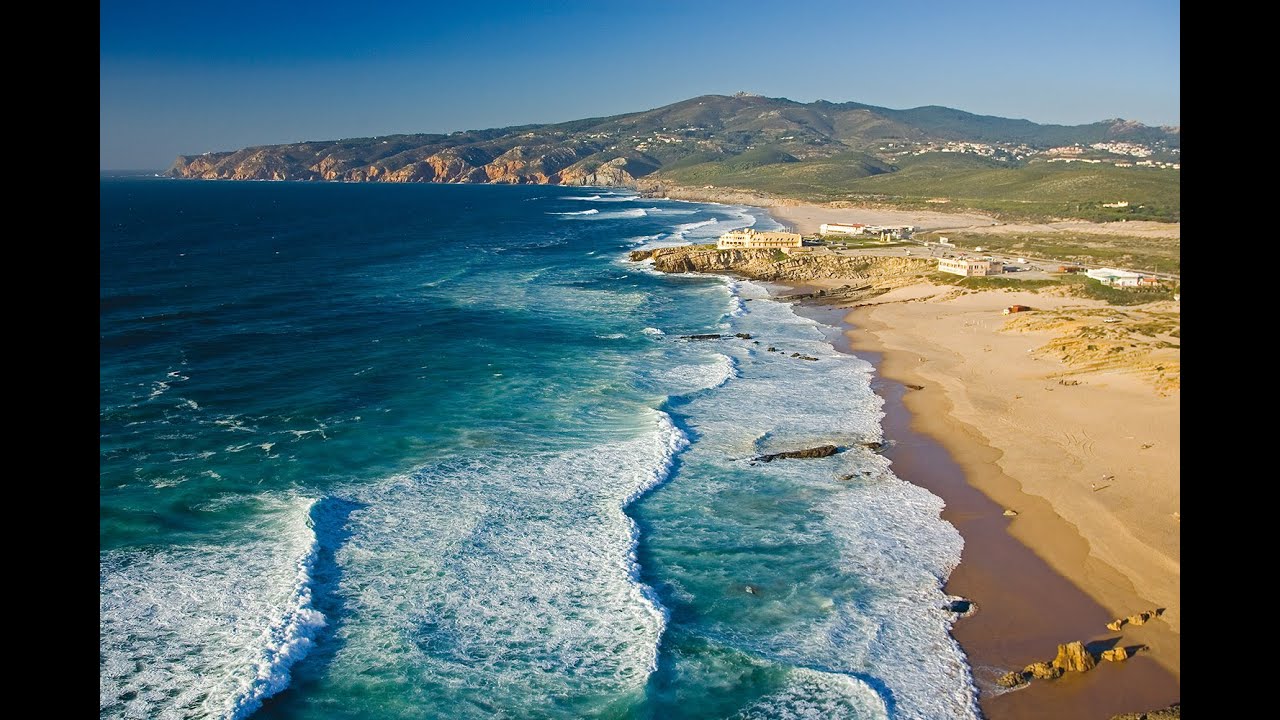
Praia do Guincho is the reason Cascais appears on surf and kite maps. The beach is a wide, dune-backed arc facing west-northwest, with the Serra de Sintra in the background on a clear day. In summer the nortada — the northerly wind — is a regular visitor. That wind is why Guincho hosts serious windsurf and kitesurf traffic, and why a beach umbrella here is a technical problem rather than a decoration.
Surfable swell can arrive even in summer, though autumn and winter are the more consistent seasons for size. In July and August, Guincho is often a wind-sports beach more than a mellow longboard beach. Several schools operate in season with lessons and rental; if you have never kited, this is not the place to teach yourself among other people’s lines. Swimmers should treat rip and wind with respect and stay in flagged areas. Plenty of people spend a Guincho day walking the sand, eating seafood nearby, and never entering the water. That is a legitimate use of the beach.
Parking fills on windy weekends. Go early, or go on a weekday. There is more space per person than at Conceição even on a busy day, which is why photographers and groups who want a dramatic coastline prefer it. Pair Guincho with Boca do Inferno on the same drive: the chasm is a cliff viewpoint, not a swimming spot, but it explains the force of this coast better than any brochure.
Surfing and wave riding
Cascais is a legitimate European surf stop, not a token “surf lesson on holiday” destination — but the lesson still exists, and Guincho is where most visitors take it. Summer conditions vary from small and crumbly to punchy on a swell pulse. Beginners are usually better on a smaller day with a school than on a pretty afternoon with an offshore-looking wind and no idea about the current.
If someone in the group already surfs, they will want a forecast, not a poem. Check a swell/wind model the night before; Guincho can be blown out for surfing while remaining excellent for kite. Other pockets along the Sintra-Cascais coast work on different directions; local schools know which. Do not wander onto rocks at Boca do Inferno with a board. That coastline is for looking.
Windsurf and kitesurf
Guincho’s reputation in wind sports is older than the Instagram era. Consistent summer wind, a wide launch, and a community of regulars mean you will not have the beach to yourself on a 20-knot afternoon — and you should not behave as if you do. Rental and instruction exist for a reason. Give way, keep landing zones clear, and pick another day if the wind is howling and you are on day one.
Spectating is underrated. A Guincho afternoon with binoculars, a sandwich, and no equipment is still beach life. The dune backdrop and the kite colours are the spectacle. Bring a layer; the wind that makes the sport also cools the sand.
Sailing from Cascais Marina
Cascais Marina is the sailing door. Summer brings sunset catamaran trips, yacht charters along the coast, and the chance of dolphins on the more honest operators. This is the water sport that does not depend on Guincho’s wind being the right kind of wind. If your group is mixed-ability — some surf, some refuse to — sailing is the shared activity that still feels like Cascais.
Schools and charter desks at the marina run introductory sessions as well as longer coastal sails. A half-day is enough for most holiday groups. Full-day sails make sense if you want to see the cliffs from seaward rather than from the Boca do Inferno car park. Book in August; weekday mornings are calmer than weekend sunsets.
SUP, kayaks, and the calmer water
Stand-up paddleboards and kayaks belong in the bay, not on a kite afternoon at Guincho. Cascais Bay and the inlets toward the marina give you a chance to look back at the citadel and the town beaches from the water. Guided kayak trips sometimes thread toward the cliff formations; conditions decide whether that is magical or a slog. Early morning and evening are the civilised hours — less boat traffic, softer light, less sunburn.
If you want a “hidden cove” experience, go with a guide rather than inventing a landing on rocks. The dramatic holes in the cliff at Boca do Inferno are viewed from the path for a reason.
A practical summer water-sports map
- Swimming and families: Conceição, Duquesa, Rainha (short visit), Tamariz
- Surf: Guincho, with a school if you are new; check wind vs swell
- Kite and windsurf: Guincho in the nortada; instruction recommended
- Sailing and dolphin trips: Cascais Marina
- SUP and kayak: Cascais Bay, morning or evening
- Look, don’t swim: Boca do Inferno
Sun, water temperature, and kit
Portuguese summer sun is stronger than the air temperature suggests. Use high SPF, reapply after swimming, and give children a shaded hour. Atlantic water in the high teens to around 20°C feels cold if you expected the Aegean. Shorty wetsuits are common for longer surf sessions even in August; swimmers on Conceição usually just get in. Town beaches have showers in season; Guincho is more of a sandy, self-sufficient operation — bring water and a windproof layer.
After a full beach day, a private pool is not a luxury, it is logistics: rinse, collapse, feed people. Cascais Vacation’s 12 m pool and 40°C jacuzzi are why groups who spend mornings at Conceição and windy afternoons at Guincho still sleep. See the villa gallery for outdoor space, and the 10 bedrooms if you are matching a surf-heavy group to rooms (ensuites for the people who will be sandy twice a day).
Beach days versus town days
Do not stack Guincho, Sintra, and a late dinner every day. Beach life in Cascais works when you pick a band of coast and stay there. A good rhythm is one town-bay day, one Guincho or sailing day, and then a culture day from the itinerary article. The house in between is what keeps that rhythm from turning into a transfer marathon.
Cascais Vacation is an exclusive-use house, not Hotel Villa Cascais or any other hotel on the waterfront. You get the whole property: outdoor dining, BBQ, pool, and space to dry boards and towels without a shared corridor. Ask about summer dates if the group is serious about water; July and August for this kind of house do not linger on the market.
Related reading
- Summer in Cascais: Town, Dining, Day Trips, and When to VisitContinue
- Family Activities in Cascais: Beaches, Parks, Museums, and a 10-Bedroom Villa BaseContinue
- Top Things to Do in Cascais: Citadel, Beaches, Museums, and SintraContinue
- Fall in Cascais: Off-Season Weather, Beaches, and Value on Portugal's CoastContinue
Stay at Cascais Vacation
Cascais Vacation is a 10-bedroom exclusive-use house in Cascais, Portugal — a privately rented home, not a hotel. Google sometimes confuses villa searches with Hotel Villa Cascais; this is a single house for your group only.