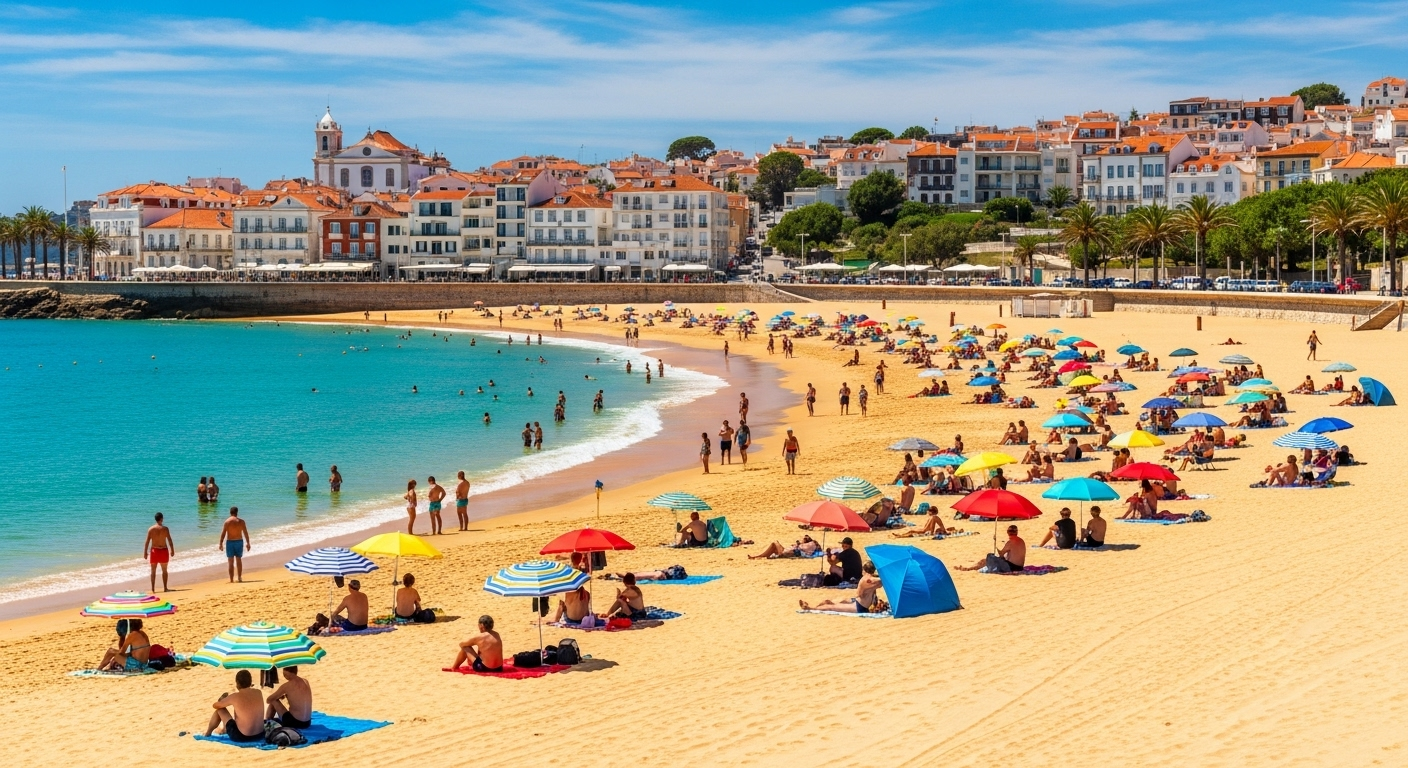
Summer in Cascais is the season most travelers picture when they search for a Portuguese coastal holiday: long daylight, café terraces in the old town, grilled fish at dinner, and easy day trips to Sintra and Lisbon. This guide is the broader seasonal itinerary — when to visit, how to spend days in town, where to eat, and which excursions to book — not a beach-by-beach sports briefing. For Guincho, Conceição, Tamariz, surfing and sailing, use the companion Cascais beach-life guide. Families and groups often base themselves at Cascais Vacation, a 10-bedroom exclusive-use house (not a hotel) a short drive from the centre.
When summer actually runs in Cascais
On the Estoril Coast, “summer” is longer than a school-holiday calendar. June already feels like high season in the historic centre; July and August are the busiest; September still delivers beach weather with a slightly softer evening. Daytime air temperatures commonly sit in the mid-20s to around 30°C. Because Cascais faces the Atlantic, not a closed Mediterranean basin, a breeze usually takes the edge off the heat — useful if you plan walking days in town rather than sitting still.
Rain is uncommon from June through August. That reliability is why Cascais works as a base for mixed itineraries: you can commit to an outdoor lunch, a Sintra palace morning, or a late passeio along the Paredão without building in a rain day. Water stays cool (often around 18–20°C even in peak months), which is why many visitors swim in the sheltered town bays and treat the open-ocean beaches as a scenery and sports landscape. Details of those beaches belong in the water-sports article; here the point is timing: if your group wants both culture and swimming, late June and September are the easiest months to combine them without peak August crowds.
Shoulder weeks at either end of summer also help with restaurants and parking in the centre. August is festive and fully booked; if you need a large exclusive-use house, enquire earlyrather than assuming last-minute availability.
A town-first summer day
Cascais still reads as a former fishing port that became a royal summer retreat, then a cosmopolitan resort. That layering is what a summer itinerary should use. Start in the pedestrian historic centre — cobbles, azulejo façades, the citadel, and the marina — before the mid-afternoon heat. The compact core is walkable: Cidadela de Cascais, Praça 5 de Outubro, and the lanes down toward the harbour can fill a morning without a car.
Late morning is the right window for Casa das Histórias Paula Rego if anyone in the group wants air-conditioning and art rather than another hour on a terrace. The terracotta pyramids are a landmark in their own right. Pair that with Marechal Carmona Park, where peacocks still wander the lawns, if you are travelling with children or simply want shade. Neither stop is a “beach day”; both are what make a Cascais summer feel like a town stay instead of a resort strip.
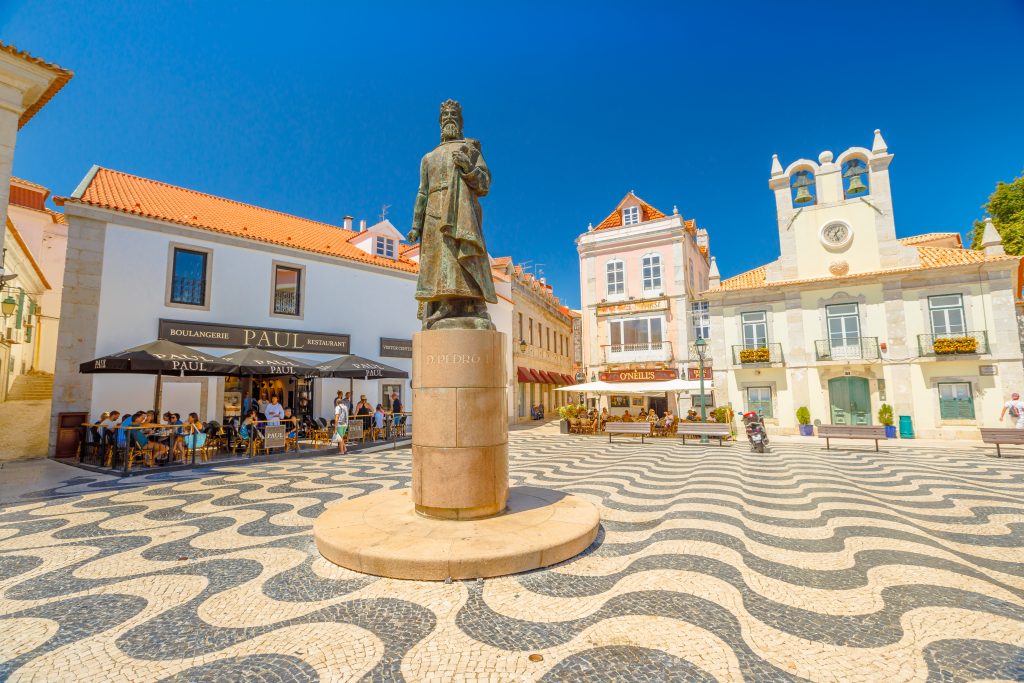
Afternoons can go one of three ways: a swim at a town beach (see the beach-life guide), a slow lunch, or a train hop into Lisbon. Evenings belong to the centre again. Outdoor tables fill, sardines appear on menus, and the marina and citadel area stay lively well after sunset. If you are staying in a private house rather than a hotel, you can also retreat for a pool hour and come back into town for a late dinner — the advantage of exclusive use.
Dining in summer, without turning this into a restaurant list
Cascais in July is a seafood town. Grilled sardines, octopus, sea bream, and cataplana-style stews show up on chalkboards because the boats still work the coast. You do not need a trophy reservation every night. Mix a proper sit-down meal with petiscos, gelato on the passeio, and at least one night cooking or catering at the house. Mercado da Vila remains useful even in high season for fruit, bread, and fish if your group likes to self-cater.
Wine lists in town lean on Vinho Verde for heat, Lisboa region whites with seafood, and the odd Colares bottle if you want something geographically specific — vines in sand just inland of this coast. For a full food-and-wine walk-through, use the Cascais food guide. The summer-specific advice is simpler: book Friday and Saturday dinners, eat lunch slightly early or slightly late, and keep one evening free for a sunset table rather than a rushed 7 p.m. sitting after a Sintra day.
Groups staying at Cascais Vacation can use the fully equipped kitchen (two large islands) and indoor/outdoor dining for large numbers, with on-site catering available at an extra charge. That is often the calmest way to feed ten or more people after a hot day in town, then walk or drive back to the centre only if you want to.
Festivals, music, and summer evenings
Summer programming in Cascais and neighbouring Estoril runs to outdoor concerts, sailing events around the marina, and food-focused weekends in the historic centre. Line-ups change year to year, so treat festival names as a category rather than a promise: check the Câmara municipal and venue calendars once you have dates. What does not change is the evening pattern — people walk, sit outside, and stay out later than they would in Lisbon’s hotter inland neighbourhoods, because the Atlantic air cools after sunset.
If your group includes teenagers or colleagues on a mixed leisure week, build in a marina stroll and an unstructured night. Over-scheduling is the usual summer mistake. A 10-bedroom exclusive-use house with a 12 m pool, gardens, and games (billiards, table tennis, air hockey) gives you a private “festival afterparty” that is not a nightclub and not a hotel lobby.
Day trips that belong on a summer itinerary
Sintra, when the coast is hot
Sintra is the classic escape from a blazing coastal afternoon. The Serra is cooler, mistier, and packed in July, so go early, pre-book Pena Palace, and do not try to see every palace in one day. A realistic summer loop is Pena plus one of Quinta da Regaleira or the Moorish Castle, lunch in town, and back to Cascais for a swim or a quiet house evening. The practical route, tickets, and walking warning are in the Sintra day-trip guide.
Lisbon without changing hotels
The Cascais line from the station in town to Cais do Sodré takes about 40 minutes and is the most civilised way to add a city day: Alfama or Belém in the morning, lunch, train back, Atlantic evening. Driving into Lisbon in August is a worse idea than it looks on a map. Keep Lisbon as a day trip unless someone in the group specifically wants nightlife in Bairro Alto; Cascais is the more comfortable summer base.
Cabo da Roca and the Sintra-Cascais Natural Park
Continental Europe’s westernmost point is a short drive and a completely different landscape from the marina: cliffs, wind, and the lighthouse. Combine it with a coastal stop on the way back rather than a second palace. It is a scenery outing, not a swimming outing — the ocean here is not a town beach.
Colares and a slow wine afternoon
If the group has had enough palaces, the sandy vineyards of Colares are the local wine story. Harvest energy builds toward late summer and early autumn. Book tastings; do not assume walk-ins in August. This is a civilised counterweight to a beach morning, and it stays inside the same micro-region as your Cascais base.
Where to stay: a house, not a hotel
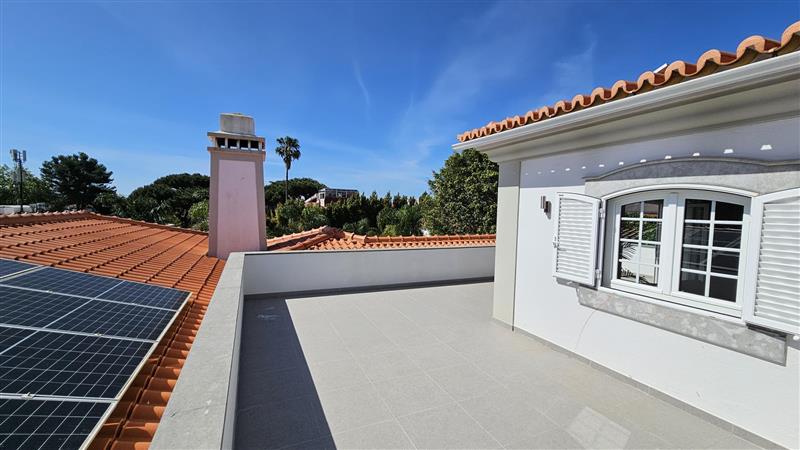
Search results for “villa Cascais” still surface Hotel Villa Cascais, a 4-star hotel in town. Cascais Vacation is not that property. It is a 1,000 m² exclusive-use house on 3,300 m², with 10 bedrooms (two master suites over 70 m² each), 165 m² of lounge, a 12 m pool, a 40°C jacuzzi, a gym, and a projector room. It sits in a residential, largely expat part of Cascais, close to the A5, about a five-minute drive from beaches, restaurants, and the centre — which is exactly the geometry you want in summer: walk or a short drive into town, then come home to a private pool when the centre is at its noisiest.
Look at the gallery for outdoor and living spaces, the 10 bedrooms, and the Cascais area page for how the town sits relative to Lisbon and Sintra. Multi-family holidays and reunion weeks are the usual summer booking pattern; corporate groups more often take May, June, or September — see the business retreat page if that is the brief.
A sample four-day summer outline
- Day 1 — Town: Historic centre, citadel and marina, Casa das Histórias or the park, sunset dinner outdoors.
- Day 2 — Coast: Follow the beach-life guide (Conceição or Tamariz in the morning; Guincho if you want wind and space). House pool in the hot hours.
- Day 3 — Sintra: Early start, one or two monuments, back to Cascais before the palace car parks unravel.
- Day 4 — Lisbon or Cabo da Roca: Train to the city, or a cliffs-and-wine loop, then a long table at the house.
That outline is enough structure for a family or a group of friends. It deliberately splits “town and trips” (this article) from “sand and water” (the other summer URL). If you only have a weekend, do town plus one beach and skip Lisbon; Sintra is the higher-yield extra day from Cascais.
Practical summer notes
Book restaurants and the house first, palaces second, cars third. The Linha de Cascais train removes most Lisbon logistics. For Cabo da Roca, Sintra hilltops, and Guincho, a car or driver is more comfortable than buses with luggage and children. Sunscreen is not optional; the Atlantic light is strong even when the air feels mild. Town beaches fill between late morning and mid-afternoon on weekends — go early or late, or stay at the house pool at noon.
If you are comparing Cascais with the Algarve, the honest summer difference is this: Cascais gives you a real town, a UNESCO mountain, and Lisbon without changing beds. The Algarve gives you warmer water and a longer beach. Groups who want both culture and coast in one week almost always pick Cascais.
Plan the stay
When you know your dates, contact Cascais Vacation for exclusive use of the 10-bedroom house, or start with the vacation rental overview. Pair this itinerary with the beach-life article if anyone in the group is coming specifically to surf or sail. Cascais in summer rewards a plan that leaves room for a late table in town — and a private house to come back to.
Related reading
Stay at Cascais Vacation
Cascais Vacation is a 10-bedroom exclusive-use house in Cascais, Portugal — a privately rented home, not a hotel. Google sometimes confuses villa searches with Hotel Villa Cascais; this is a single house for your group only.